Modern Garden Fencing Design Trends for 2026
Table of Contents
- Why Modern Garden Fencing Matters Now
- Modern Garden Fence Ideas That Work in 2026
- Horizontal Slat Fencing: Clean Lines and Contemporary Appeal
- Composite Garden Fencing: Durability Meets Low Maintenance
- Wind Resistant Garden Fencing for Exposed Gardens
- Colour, Materials, and Design Choices That Define Modern Fencing
- Installation, Boundaries, and Planning Your Fence Project
- Frequently Asked Questions
Last Updated: October 8, 2026
Why Modern Garden Fencing Matters Now
Your garden fence shapes how your outdoor space feels, how private it is, and how much maintenance it demands. Homeowners sometimes invest in fencing that looks great for six months, then becomes a source of frustration.
Modern garden fencing means choosing materials and designs that suit your climate, lifestyle, and budget. Today's trends prioritise clean lines, low maintenance, and durability.
Modern Garden Fence Ideas That Work in 2026
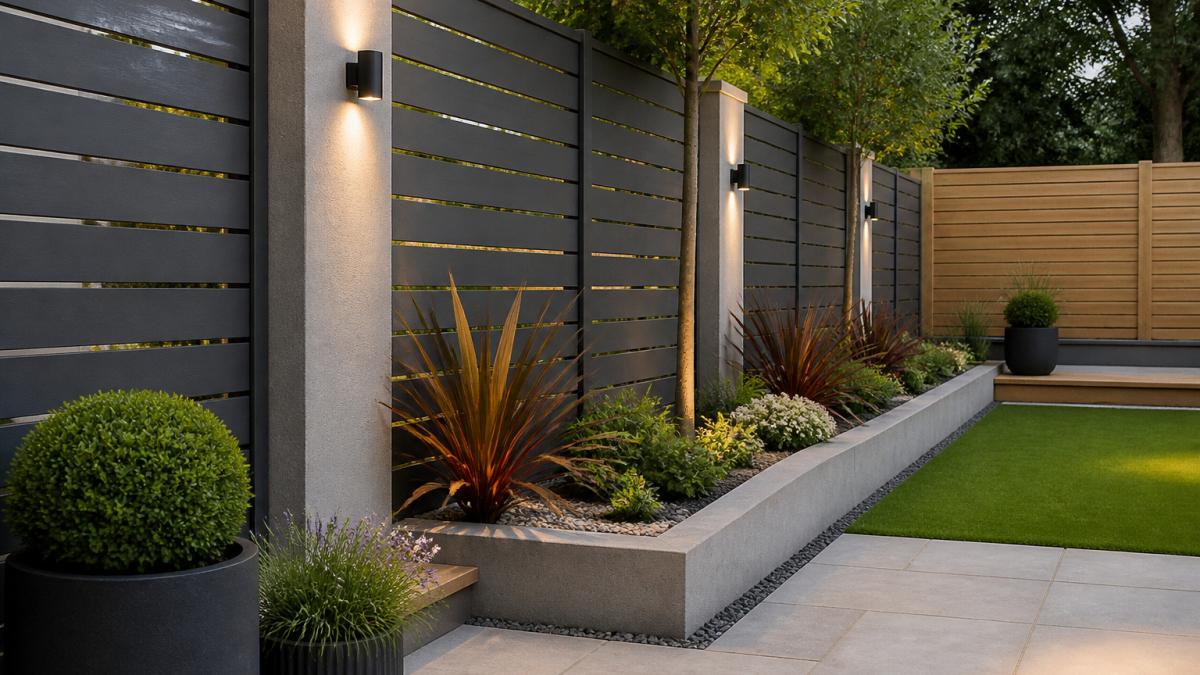
Horizontal slat fencing remains the dominant trend. Clean, parallel lines create a minimalist aesthetic that works with almost any garden style.
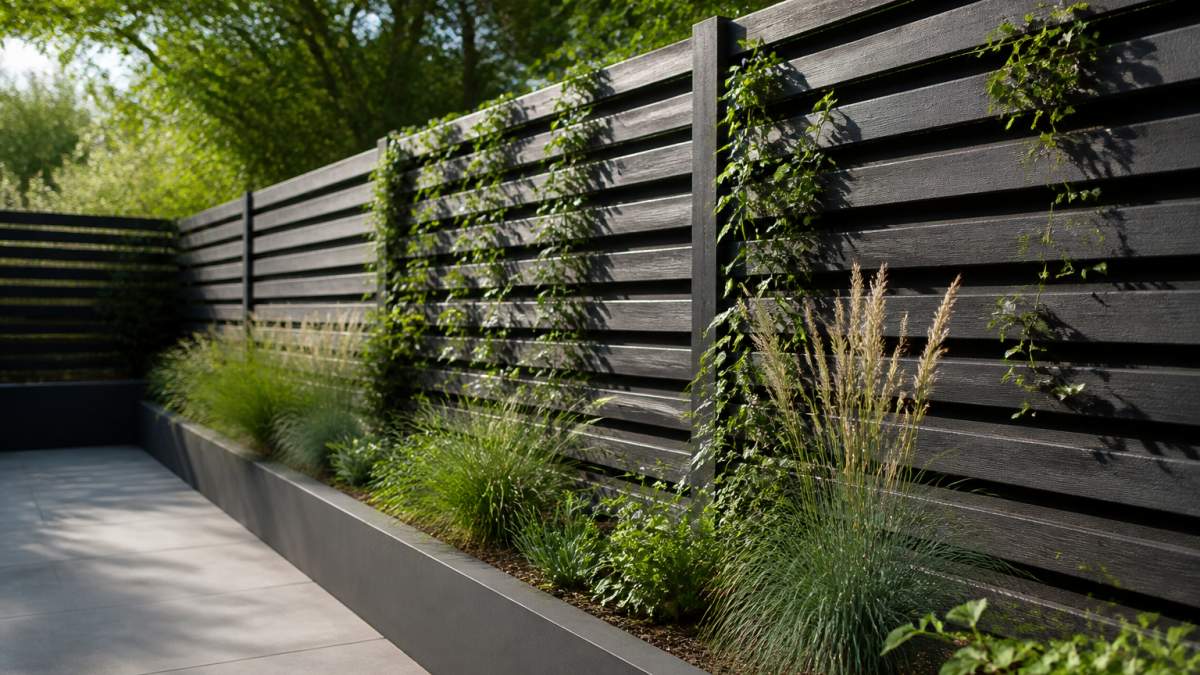
Composite panels are gaining ground because they eliminate the maintenance headache. No painting, no rotting, no splinters. The trade-off is cost, they're pricier upfront.
Rendered walls and brick boundaries suit urban gardens where privacy matters more than views, feeling more permanent and architectural than timber.
Privacy screening with integrated planting turns a fence into a backdrop for climbing plants, softening the hard line between your garden and your neighbour's.
Minimalist colour palettes define contemporary design. Charcoal, graphite, soft grey, and natural timber tones dominate; bold colours are accents, not the main event.
Modern fencing works hardest when it complements your garden's existing lines and materials.
Horizontal Slat Fencing: Clean Lines and Contemporary Appeal
Horizontal slat fencing defines modern garden design. The parallel lines create visual continuity and make gardens feel wider, simple, but that's why it works.
Why horizontal slats work:
- They draw the eye across the space, making narrow gardens feel broader
- The open gaps between slats allow light and airflow through the garden
- Installation can be straightforward
- They suit both minimalist and planted gardens equally well
Material choices for horizontal slats:
Timber slats offer warmth and natural texture, and rough-sawn feels more contemporary than planed. The trade-off is treatment every few years to resist weather and rot.
Composite slats eliminate maintenance but cost more. They stay the same colour indefinitely, some like that consistency, others find it feels plastic.
Metal slats (aluminium or steel) are durable and maintenance-free but create a harder, industrial look that feels cold in most residential gardens.
Spacing matters. Slats 10-15mm apart allow visibility and airflow; closer spacing creates more privacy, wider screens less. There's no "correct" spacing, it depends on what you want the fence to do.
Composite Garden Fencing: Durability Meets Low Maintenance
Composite fencing is engineered timber, wood fibres bound with plastic resin. It looks like timber but behaves differently, and that difference matters most over the fence's full life.
The appeal is obvious: no painting, no staining, no rot. Most composite panels carry a manufacturer's warranty of 10 to 15 years, and many last 20+ years with minimal intervention.
The reality is more nuanced. Composite costs significantly more upfront and doesn't weather naturally, it stays the same colour year after year. Some find that reassuring; others find it artificial.
Composite expands and contracts with temperature more than timber, so installation must account for that movement or panels can warp.
Composite is harder to repair than timber: a damaged panel usually means replacing the whole section, and inconsistent colour matching across batches can make repairs visible.
Lifecycle cost, not just sticker price
Compare composite against timber in cost per year of service, not cost per panel.
- Timber typically needs treating or staining every 3 to 5 years to resist weather and rot, three to five maintenance cycles over a 15-year life, plus the occasional replacement post or board.
- Composite typically needs an occasional wash with soapy water and a soft brush, a handful of cleaning afternoons over the same 15 years.
- Rendered or brick boundaries need repainting roughly every 10 to 15 years and little else in between.
Maintenance schedule you can actually follow
Composite is low-maintenance, not maintenance-free. A realistic routine:
- Twice a year: wash down with warm soapy water and a soft brush to remove pollen, algae and dirt. Avoid pressure washers on a narrow jet, which can etch the surface.
- After storms: check posts and fixings for movement, especially in exposed gardens.
- Annually: inspect the base of each post for water pooling and clear any debris that traps moisture.
- As needed: touch up scuffs with a manufacturer-approved cleaner rather than abrasive pads.
Sustainability and sourcing
Composite's environmental story is mixed and worth understanding before you buy.
- Recycled composite uses reclaimed plastic and sometimes reclaimed wood fibre, diverting waste from landfill, generally the lower-impact choice. Ask the supplier what proportion is recycled and where the material comes from.
- Virgin composite uses new plastic resin, which carries a higher embodied carbon footprint.
- Certified timber from responsibly managed sources remains a genuinely low-impact option when sourced and treated properly, and it stores carbon for the life of the fence.
If sustainability is a priority, ask for the recycled content figure and country of manufacture, a fence shipped halfway around the world can wipe out the carbon benefit of recycled material.
When composite makes sense: You want low maintenance and will pay for it, don't mind the absence of natural weathering, and plan to stay long enough to recoup the higher upfront cost.
When timber makes more sense: Budget is a priority, you like how timber ages, you're comfortable with periodic maintenance, and you want the option to repair rather than replace.
Guidance on responsible sourcing of timber and wood products
Wind Resistant Garden Fencing for Exposed Gardens
Gardens in exposed locations, coastal areas, hilltops, or open countryside, face different challenges. Standard fencing catches wind like a sail and can fail structurally.
Wind resistant garden fencing requires different design thinking. Solid panels catch more wind than slatted panels.
Design strategies for wind:
Slatted or mesh panels outperform solid panels in high winds because gaps let wind pass through. Horizontal slats are more wind-resistant than vertical battens.
Closer post spacing (1.2m to 1.5m) is stronger than standard 1.8m, and deeper concrete footings (600mm to 750mm) anchor better.
Height affects wind load. A 1.2m fence catches less wind than a 1.8m fence.
Angled or curved designs reduce wind pressure compared to straight runs, and a slightly angled fence can be more stable.
Material considerations: Timber is lighter than composite or brick, so less force pushes on posts, but lighter materials need stronger connections and deeper footings.
Colour, Materials, and Design Choices That Define Modern Fencing
Colour choices in modern garden fencing have narrowed.
Charcoal and graphite greys are the contemporary default: neutral enough for any garden style, dark enough to recede visually, and better at hiding weathering than lighter shades.
Natural timber tones, honey, golden brown, warm grey, remain popular, especially in rural settings. These colours age gracefully and feel less industrial than grey.
Black is increasingly common in urban gardens, creating drama and making planting stand out, though it shows every speck of dirt and pollen.
Rendered finishes in off-white, soft grey, or pale cream are common on brick or concrete walls used as fencing, feeling architectural and permanent.
Bold colours are rare. Bright blues, greens, or reds are typically accents on gates or small sections, not entire runs.
A framework for choosing material
Rather than picking a colour first, work through four questions in order, the sequence most fencing contractors use, which prevents choosing a look the site cannot support.
- What is the exposure? Coastal, hilltop and open countryside sites need wind-tolerant designs, slatted or mesh panels outperform solid ones because wind passes through.
- How much maintenance will you actually do? Be honest. If the answer is 'very little', composite, metal or rendered boundaries will serve you better than timber.
- How long will you stay? Under eight years, prioritise upfront cost. Longer, prioritise lifecycle cost.
- What is the boundary situation? Height limits, conservation areas and party boundary rules can rule out designs before colour even enters the conversation.
Material comparison at a glance
| Material | Typical maintenance | Typical lifespan | Best suited to |
|---|---|---|---|
| Timber (treated) | Treat every 3-5 years | 10-15 years | Natural look, budget-conscious, rural settings |
| Composite | Wash twice a year | 20+ years | Low-maintenance households, exposed sites |
| Aluminium / steel | Occasional clean | 25+ years | Urban, industrial, minimalist schemes |
| Rendered wall | Repaint every 10-15 years | 30+ years | Urban privacy, architectural gardens |
| Brick | Clean only | 50+ years | Permanent boundaries, period properties |
Colour and the garden around it
Colour doesn't exist in isolation. A charcoal fence against dark evergreens can feel heavy; the same fence against pale gravel and ornamental grasses feels crisp. A warm timber tone next to red brick can clash, while next to sandstone or render it looks intentional.
A useful rule: pick the fence colour last, after deciding hard landscaping and dominant planting. The fence is the backdrop, not the subject.
Sustainability as a design choice
Material choice is also an environmental choice.
- Recycled composite diverts plastic and wood waste from landfill and is generally the lower-impact manufactured option.
- Certified timber from responsibly managed sources stores carbon for the life of the fence and is fully biodegradable at end of life.
- Metal is highly recyclable but energy-intensive to produce.
- Brick and render are long-lived and low-maintenance, which spreads their embodied carbon over decades.
Ask suppliers for recycled content, country of manufacture and any certification before you commit. A fence lasting 25 years can be lower-impact than one replaced twice in the same period.
Planning guidance on fences, walls and gates for homeowners
Installation, Boundaries, and Planning Your Fence Project
Before ordering materials, understand the legal and practical constraints.
Access for maintenance is essential. Leave space on at least one side to paint, treat, or repair the fence rather than building hard against a boundary or wall.
Ground conditions matter. Clay holds posts more securely than sand, and waterlogged ground weakens concrete footings.
Planning permission is usually not required for domestic fencing under 2m, but exceptions apply: conservation areas, listed properties, or fences near roads may need permission.
Timing matters. Autumn and early winter are ideal: ground is still workable and posts have winter to settle. Spring installations can be rushed if ground is waterlogged.
For projects beyond your DIY comfort level, professional installation ensures the fence is built to proper standards and will last.
Modern garden fencing in 2026 prioritises durability, low maintenance, and designs that complement your outdoor space rather than dominate it. If you're ready to explore options, M&C Paving Northeast offers professional advice and installation across the North East.
Frequently Asked Questions
What are the latest fencing trends for modern gardens?
Modern garden fencing in 2026 emphasises minimalist design, horizontal slats, composite materials, and neutral colour palettes. Trends favour clean lines over ornamental details, durable low-maintenance materials over traditional timber, and designs that balance privacy with light and airflow. Contemporary styles often incorporate sustainable sourcing and integration with garden planting schemes rather than standing alone as barriers.
Which fencing materials are most durable and low maintenance?
Composite garden fencing and rendered walls offer the lowest maintenance requirements, resisting rot, weathering, and pest damage without annual treatment. Pressure-treated timber requires periodic sealing. Material choice depends on your climate, budget, and aesthetic preference.
What type of garden fencing works best in windy conditions?
Wind resistant garden fencing often benefits from designs that allow some wind passage, such as horizontal slat fencing with staggered boards, which can reduce stress on posts. Composite panels and rendered walls can also provide good wind resistance. Posts are often set deep in concrete footings and spaced appropriately. In very exposed locations, considering fence height and seeking professional advice is often recommended.
How do I choose between privacy and maintaining views and airflow?
Solid fences provide maximum privacy but can make small gardens feel enclosed. Horizontal slat fencing with gaps allows light and airflow while still screening views. Composite panels come in various opacity levels. Consider your garden's size, prevailing wind direction, and sun exposure. In small gardens, semi-transparent designs or living screens (hedging) often balance privacy with openness better than solid barriers. Considering professional assessment can help ensure your choice suits your specific space.
